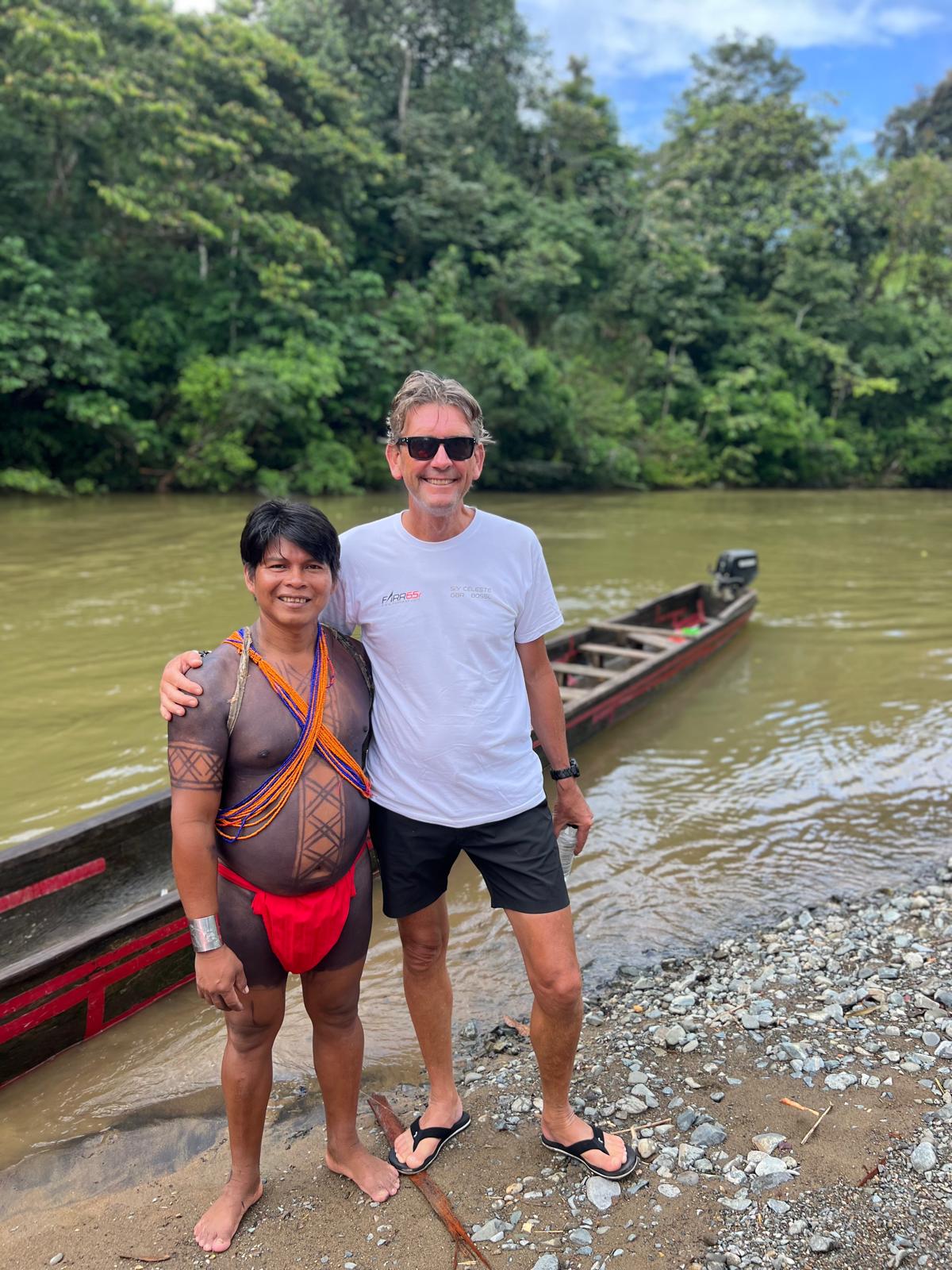
The Emberá reside in river-based rainforest communities, and this Wednesday, World ARC organized a visit to one of their villages. Panama is home to six Indigenous peoples: the Guna, which we the crew of Celeste got to know quite well in Guna Yala (the San Blas Islands), the Ngäbe, the Buglé, the Naso, the Wounaan, and the Emberá.
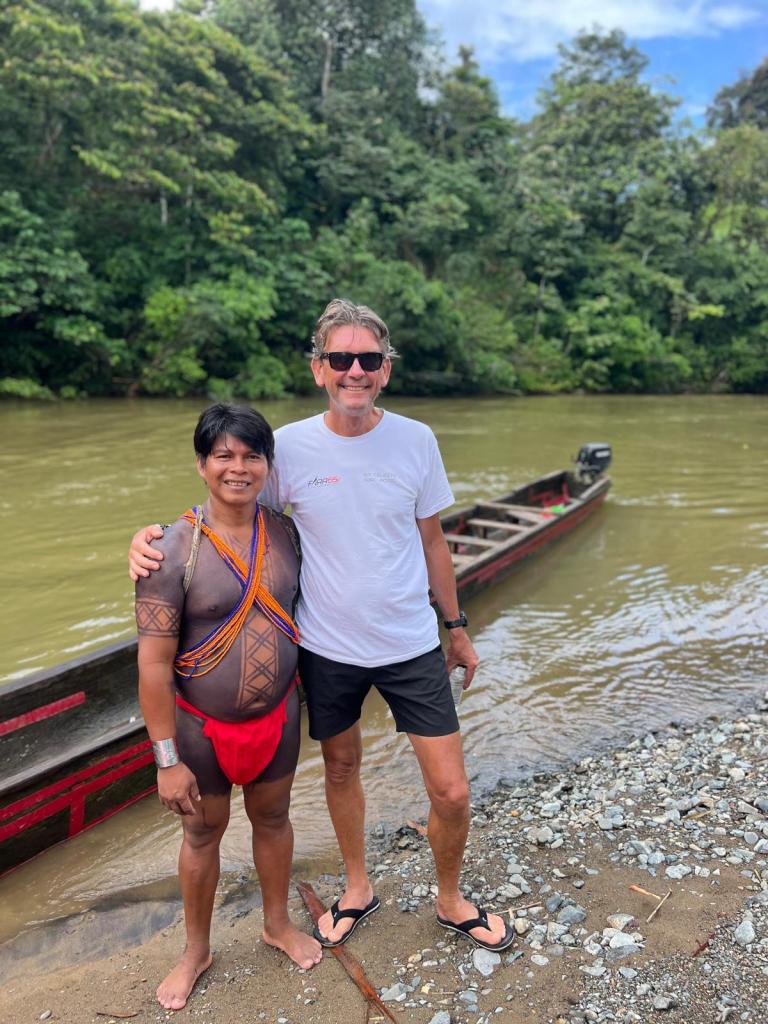
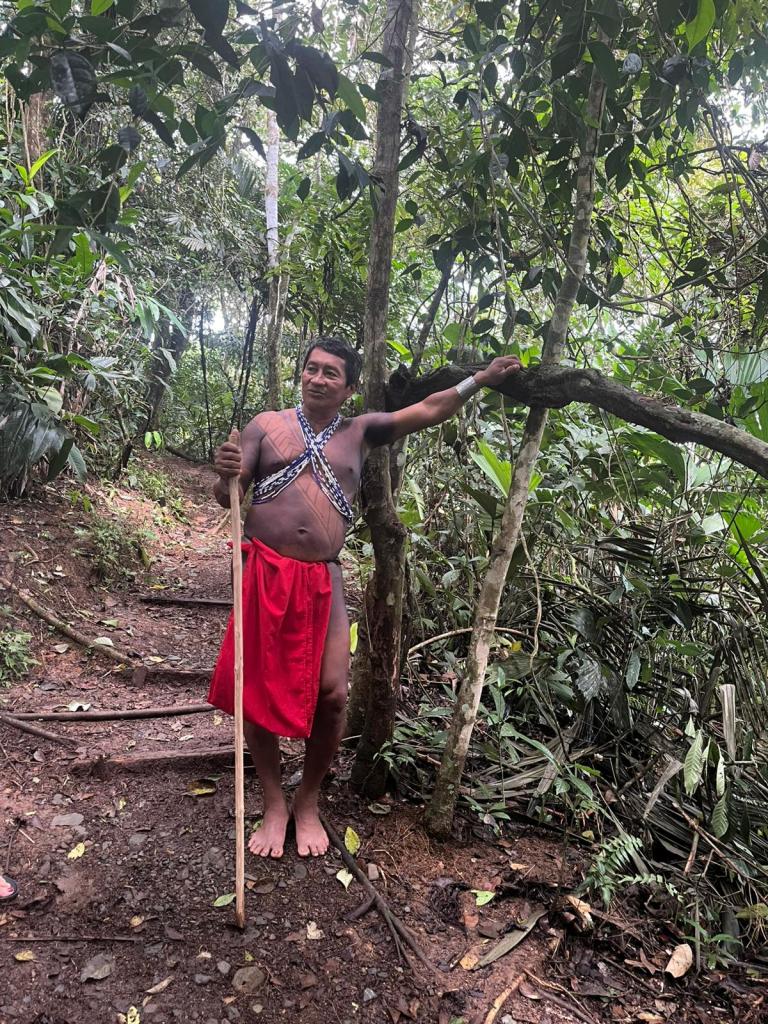
We travelled to Chagres National Park, where we were greeted by Emberá villagers donning red loincloths and ornamental beads. They took us on an hour-long journey along the Pequení River in their motorized canoes made from dugout tree trunks.
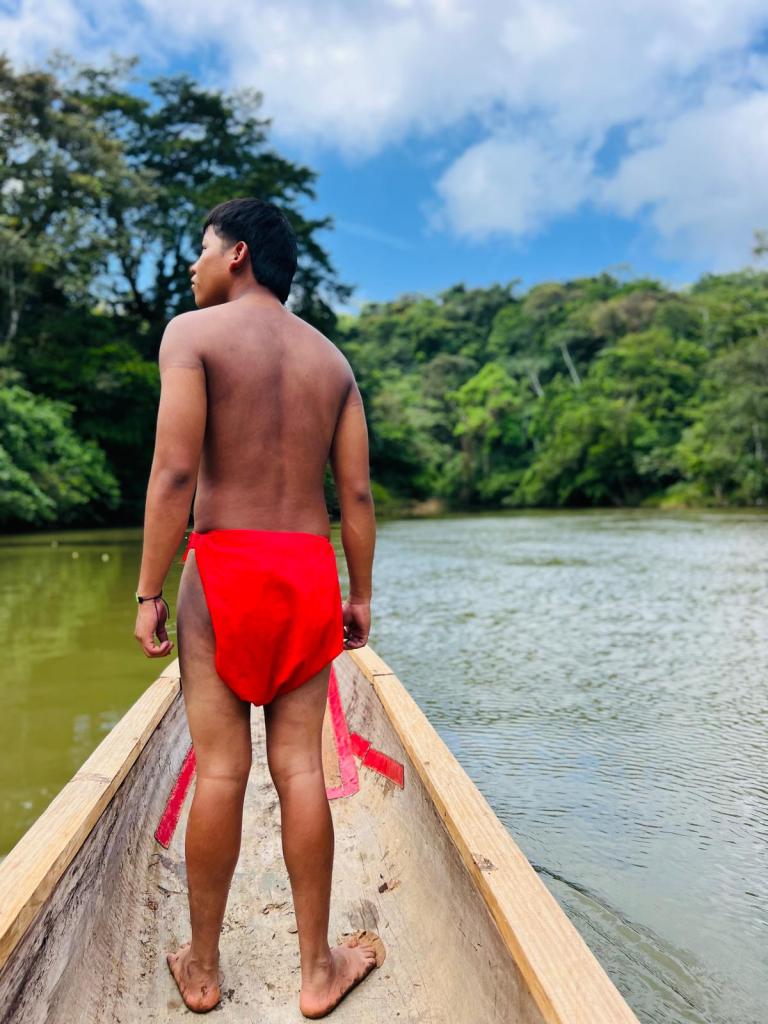
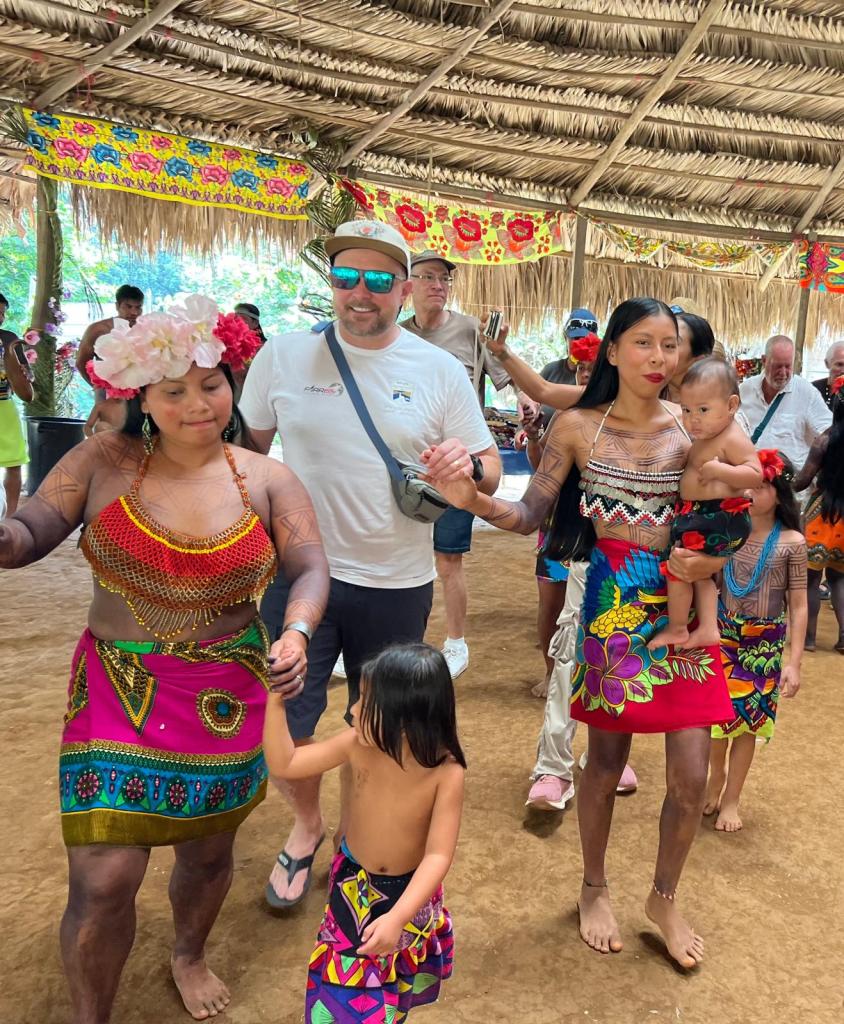
Arriving in their village, Emberá Purú, the rest of the community welcomed us. Twenty-five families, or 137 adults, live here in a series of huts built on stilts.
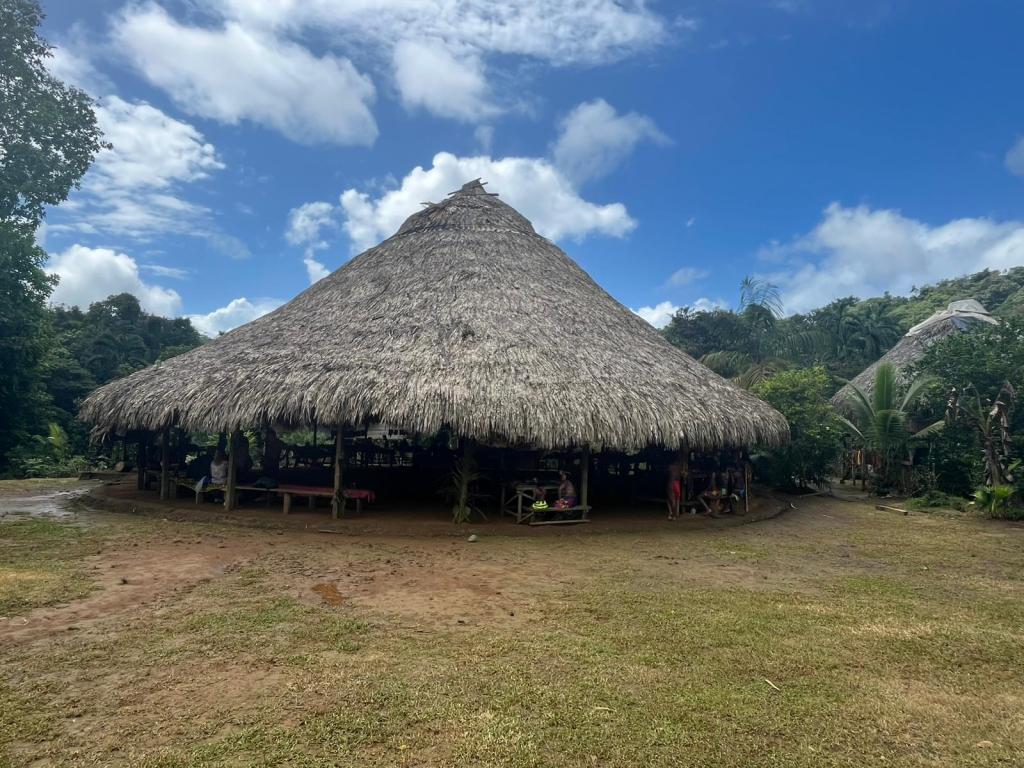
We got an hour-long tour of the village. La Casa de Congreso — the heart of the village, where important decisions are made and where we were welcomed to learn about their way of life.
Originally from the Chocó region in Colombia, the Emberá moved into the Chagres basin via the Darién region after conflicts with Colombian guerrilla groups who would raid their villages for supplies.
When Chagres National Park was established in 1985, the Emberá were already present along the Chagres River, having settled the area decades earlier as part of this migration. The park’s creation was driven by the need to safeguard the watershed that supplies freshwater to the Panama Canal, but it also imposed new limits on Indigenous life. Hunting, logging, and forest clearing — central to Emberá subsistence and autonomy — were sharply restricted within the protected area. As a result, many communities were forced to adapt, increasingly turning to tourism, cultural visits, and handicrafts as a way to bridge the income gap left by curtailed access to forest resources. Today, the Emberá presence in Chagres reflects both coexistence and constraint: a conservation model that protects a global trade artery while quietly reshaping the livelihoods of those who have long depended on the forest itself.
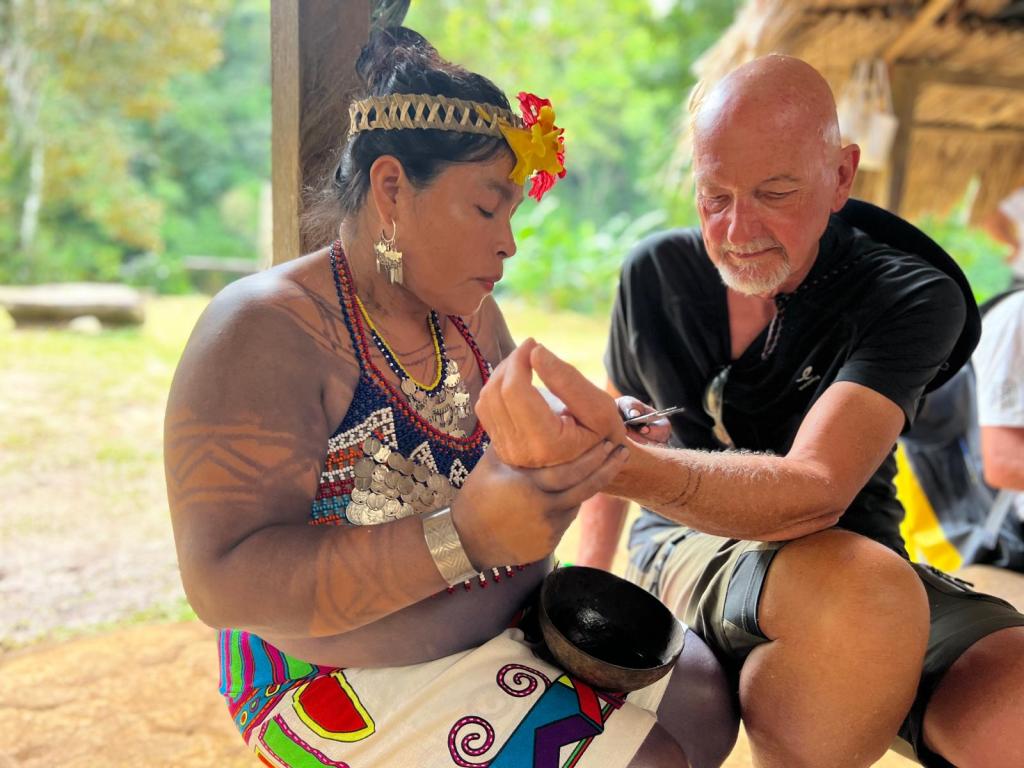
Among the Emberá people, body painting is both adornment and tradition, made using jagua, the juice of the unripe fruit of the Genipa americana tree. The sap is applied directly to the skin with thin sticks or palm fibers, where it slowly oxidizes and darkens into a deep blue-black over several hours. The geometric and flowing designs are inspired by the forest and rivers, and can signal celebration, identity, or simply beauty. Unlike permanent tattoos, jagua markings fade naturally after one to three weeks, disappearing as the skin renews itself. Here, the crew of Celeste receive matching Emberá tattoos.
The the Emberá people still rely on herbs and plants to cure less serious ailments. There is even uña de gato, a plant from which they make a natural version of viagra.
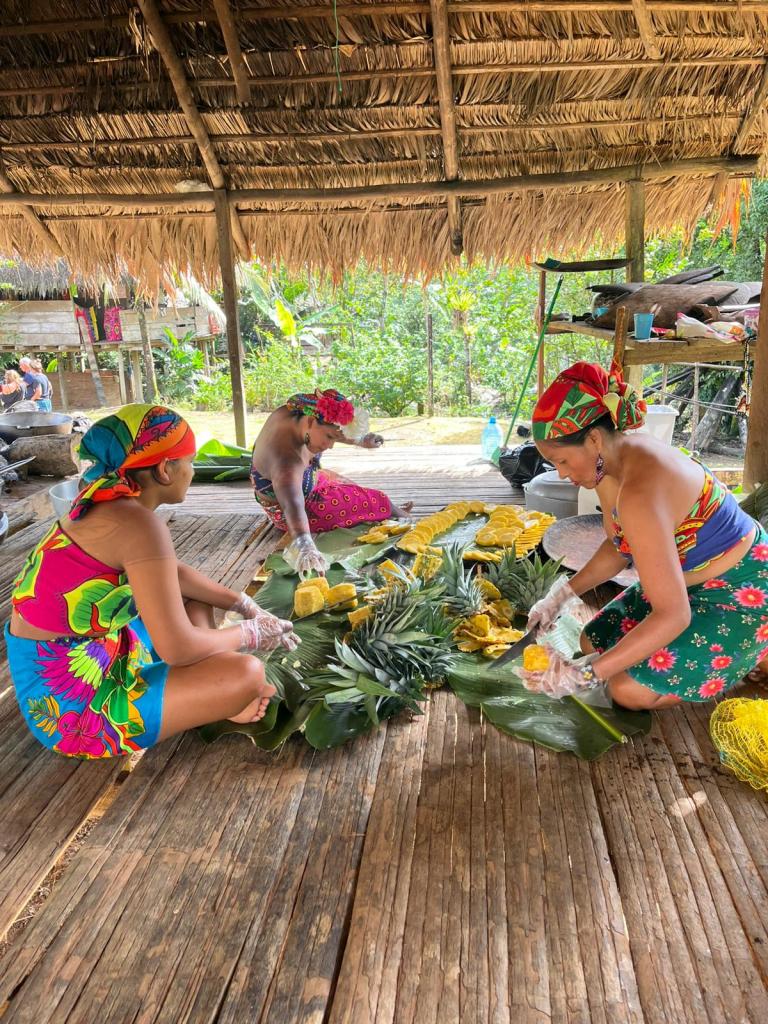
We wrapped up our visit with a wonderful lunch — freshly caught river fish and patacones, the local fried plantain specialty, followed by fresh pineapple, watermelon, and bananas.
 SAILING ROUND THE WORLD